Introduction
There are approximately 17 000 post offices in France at the time of the stamp Marianne de Béquet. But these offices are very different as they are located in a rural area or in an urban one, in a big city or in a small village.
In this article, we will be interested in the various types of civil post offices through their cancelling imprints (military post offices are handled in the article Military post office). We will distinguish eleven types of post offices which have different mail stamps or different wording, at least until 1966 when there was a progressive standardization of mail stamps (Cf. The book [17] of P. LAVENAS -> 14]). We will classify these post offices in three big categories: offices open to the public, those who are not and the temporary offices. Let us note that this article owes a lot to the brochure [11] of M. FREY.
We will define rather quickly these various types of post offices, then we will describe stamps or imprint which are associated to them by illustrating them by means of covers.
Post offices open to the public
Post offices open to the public can be classified in eight categories.
Full service post offices
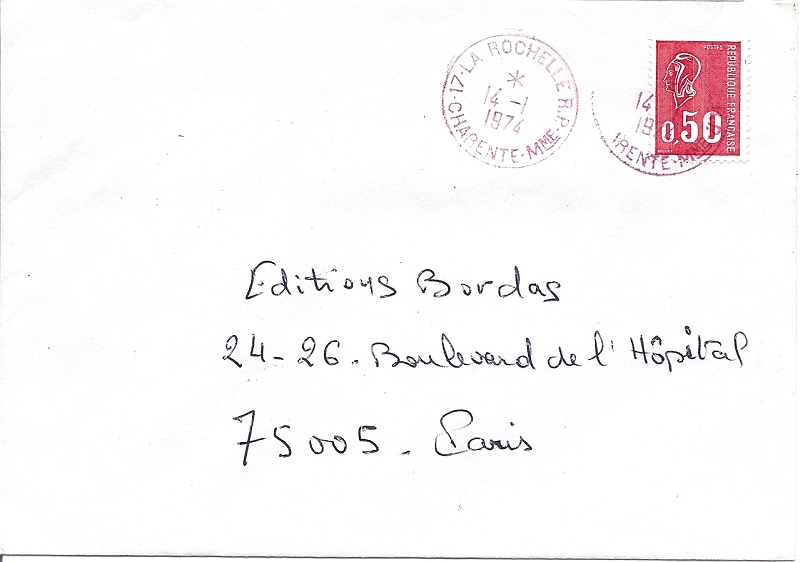
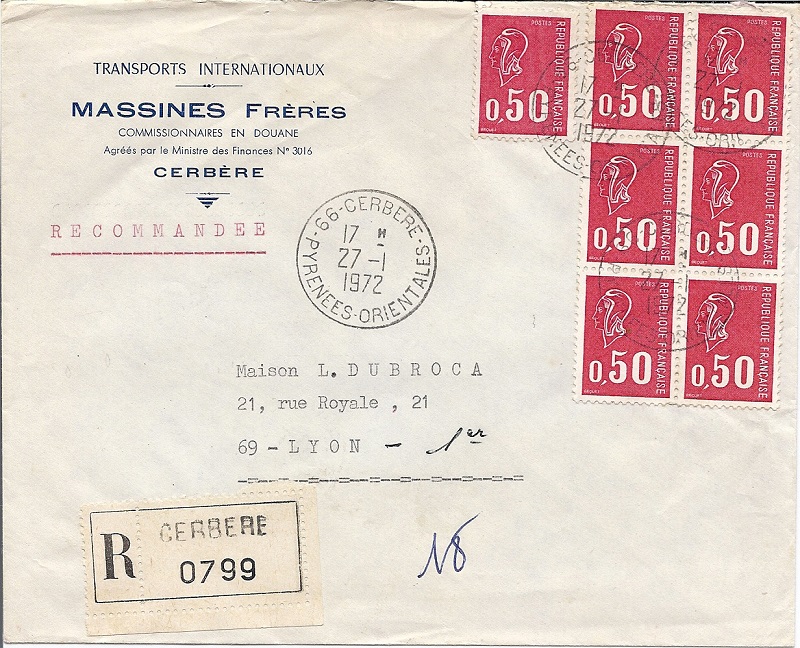
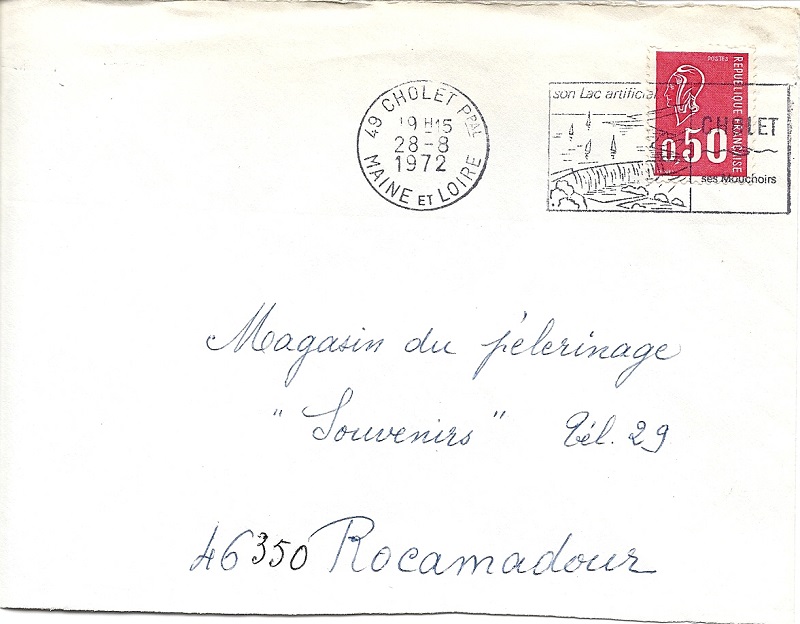
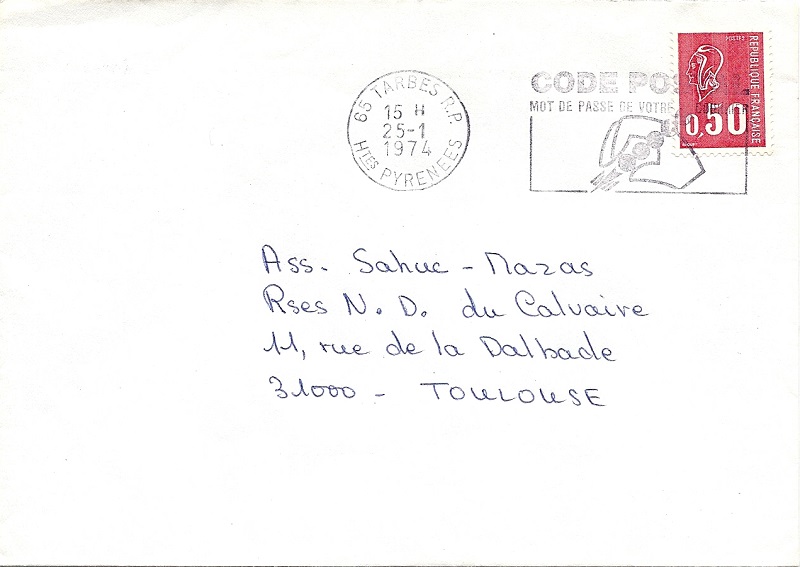
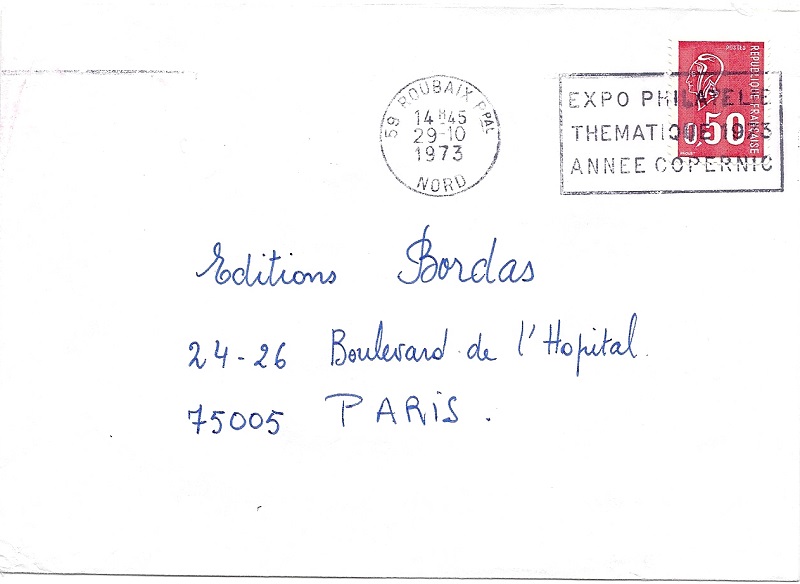
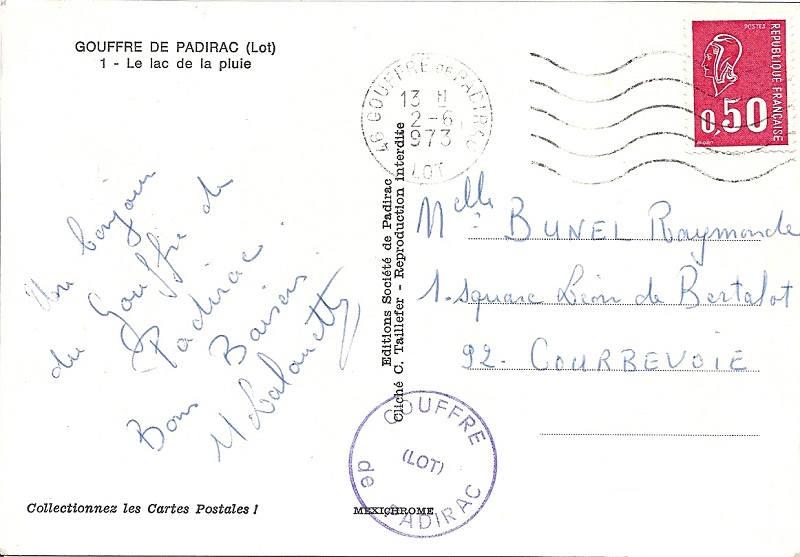
A full service post office is an establishment the conductor of which possesses the quality of public accountant and which do not depend on an administrative and accounting level of any other post office. Such an establishment enables customers to do all possible post transactions: mail and parcels franking and depositing, purchase of mail products, financial transactions, ... Postmarks of these offices belong to the A9 type of the book [14] of A. LAUTIER with a simple continuous circle or, more rarely for the reporting period, to the A8 type (without any department number).
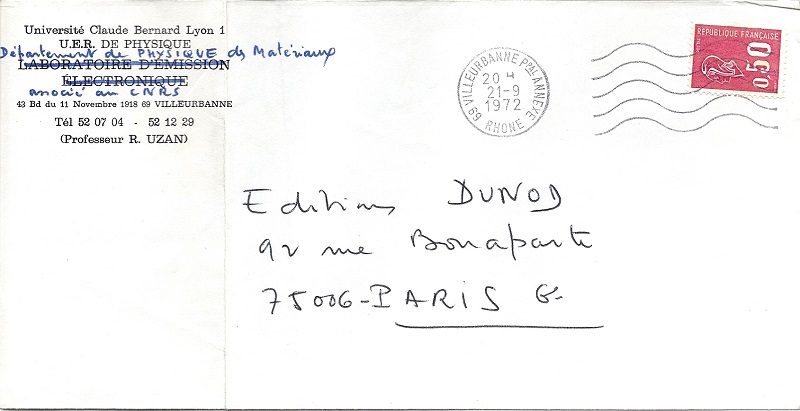
From the point of view of the name, if only one post office works in a locality, it takes the name of this locality. If this town is the administrative center of a department, the full service post office (or the most important of them) takes the name of " Main post office " (R.P.E. In french). In localities seats of several post offices, the main office takes the name of the municipality followed by the mention “PRINCIPAL”. The other post offices take the name of the locality followed by the name of the district or the public road where they are located.





Sub post offices
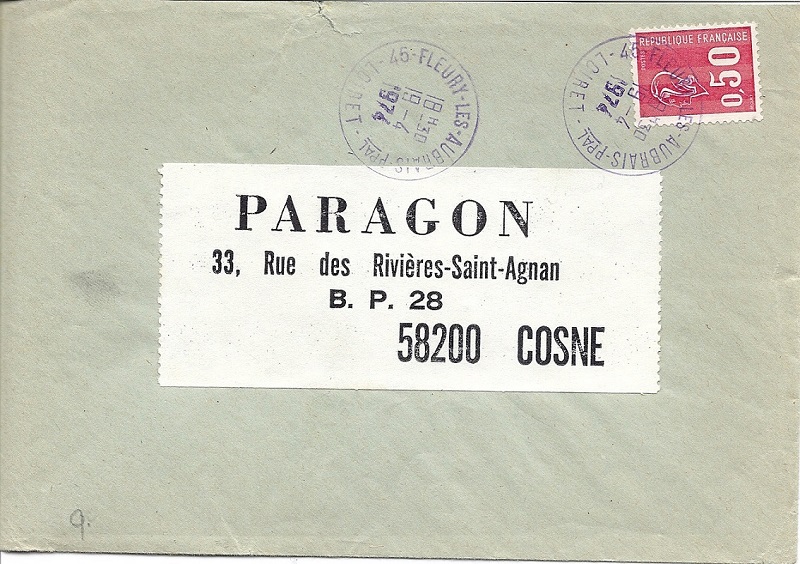
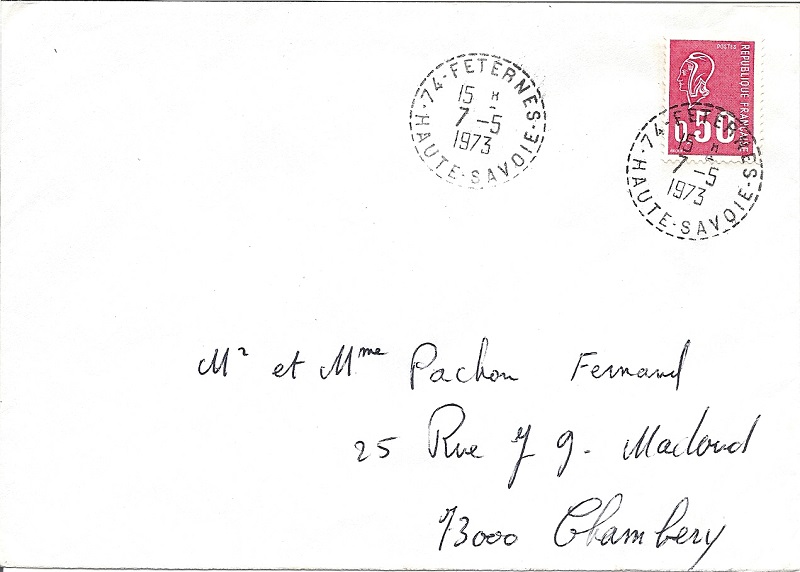
Sub post offices are connected with a full service post office because their conductor does not possess the quality of public accountant. Postmarks of these offices belong to the B9 type of the book [14] of A. LAUTIER with a dotted circle.
Post offices annexes
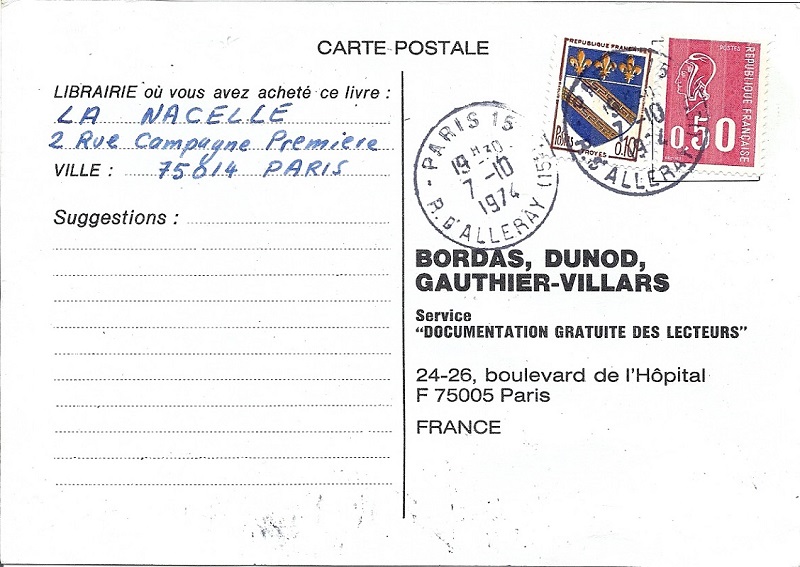
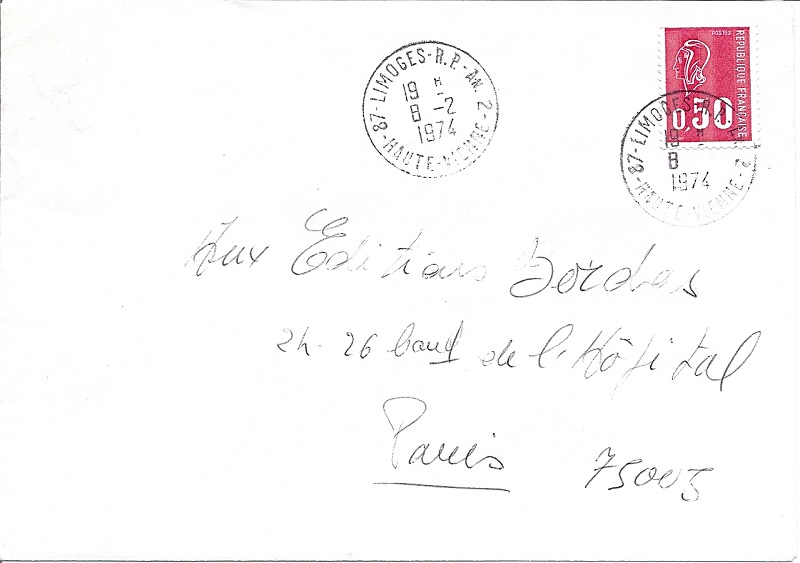
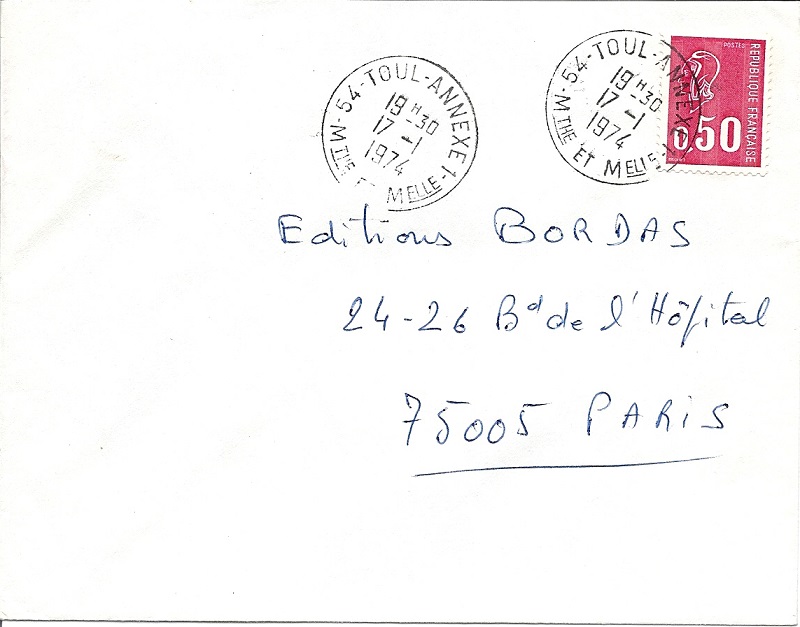
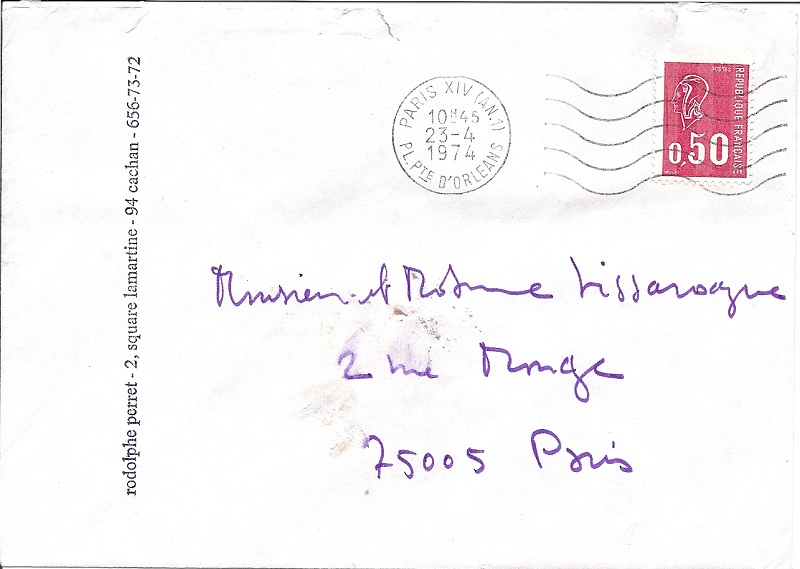
A post office annexe is an office connected with another post office. Postmarks of these offices belong to the A9 type of the book [14] of A. LAUTIER.

Mobile post offices and mobile satellite post offices
In 1959, the Post Office introduced a mobile version (based on a yellow Citroën H van) of the fixed post office concept, to better serve areas of migration or human settlement. This mobile post office took two forms. The first, called the “Bureau Mobile” (mobile post office) (BM), is managed by a postmaster or a postmaster-distributor. This type of mobile post office is found primarily in rural areas, where the traditional post office is threatened with closure due to insufficient daily activity. The second, called the “Guichet Annexe Mobile” (mobile satellite post office) (GAM), is managed by operational staff similar to tellers at fixed post offices and therefore functions as a counter—whether an annex or not—of the full-service post office to which it is attached. GAMs are primarily located in urban and suburban areas, suburbs, priority urbanization zones, and industrial and commercial areas.
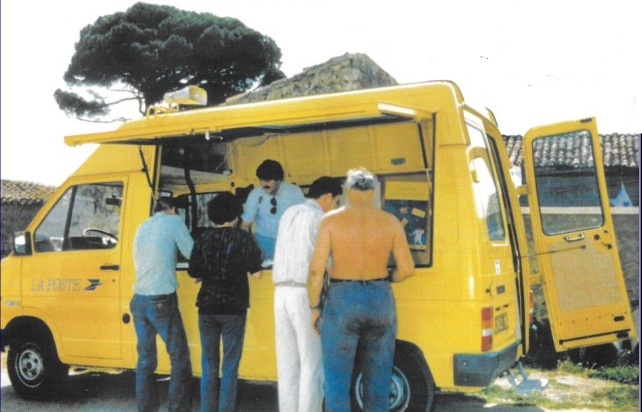
The original idea of the General Directorate of the Post Office was to give French factory workers
the opportunity to use government services once their shift on the assembly line was over, without having to travel to distant city centers where the post offices were located. The first mobile office concept launched was therefore called the “post office at the factory”. In certain areas, especially rural ones, the GAM parked at the market; it also served areas where many public housing projects were being built. These were then called the “post office at the market” or the “post office at the public housing projects”. The “post office at the campground” and the “post office at the beach” are two other seasonal concepts that appear in areas with temporary population influxes in tourist regions.
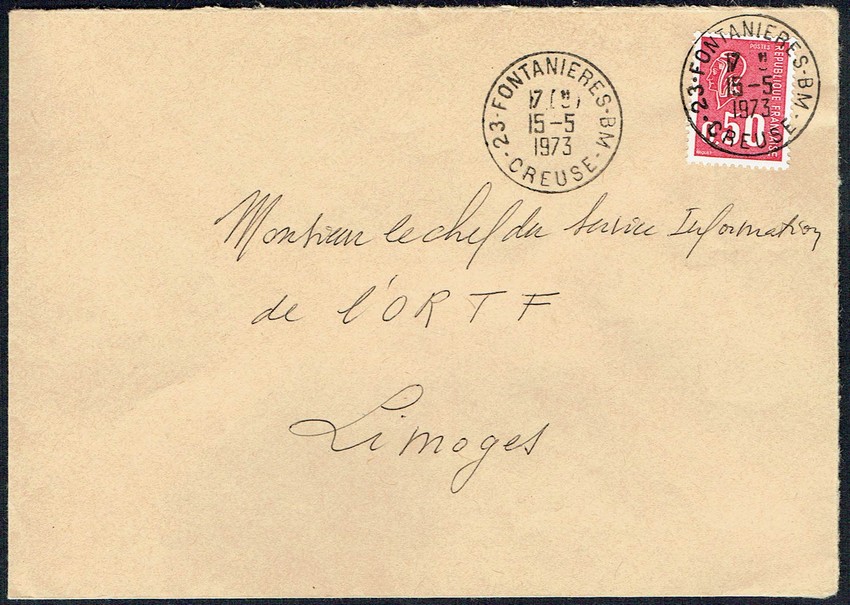
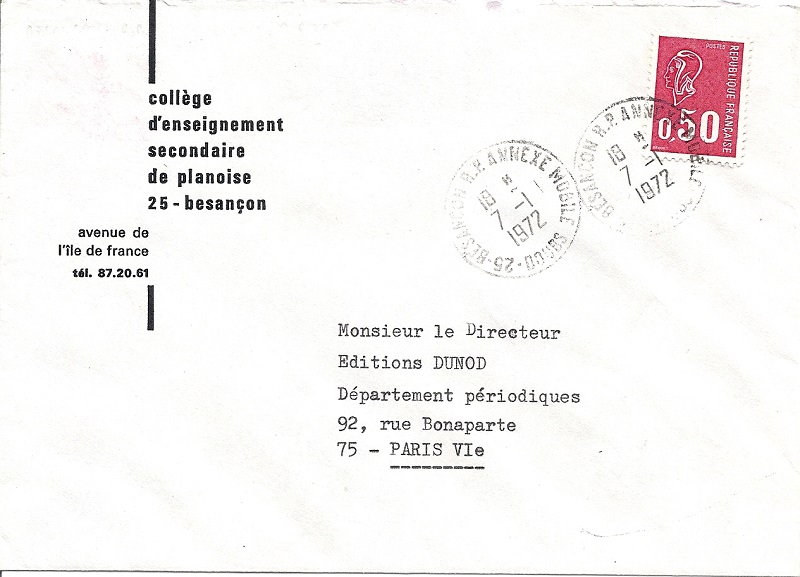
Urban auxiliary office
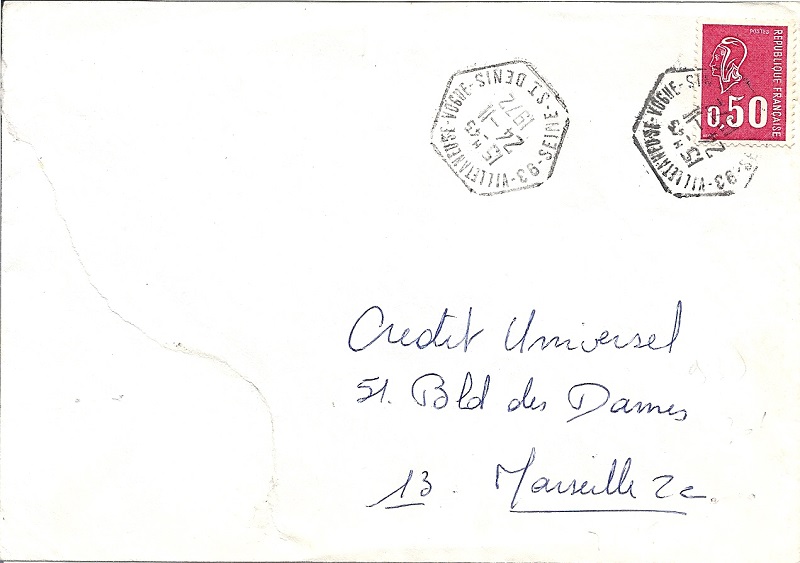
An urban auxiliary office is the annex of an office with a high traffic, which can do all simple mail operations, in an urban area. Such an office is occupied by a storekeeper. Postmarks of these offices belong to the D9d type of the book [14] of A. LAUTIER with a continuous hexagon, or to the A9 type.
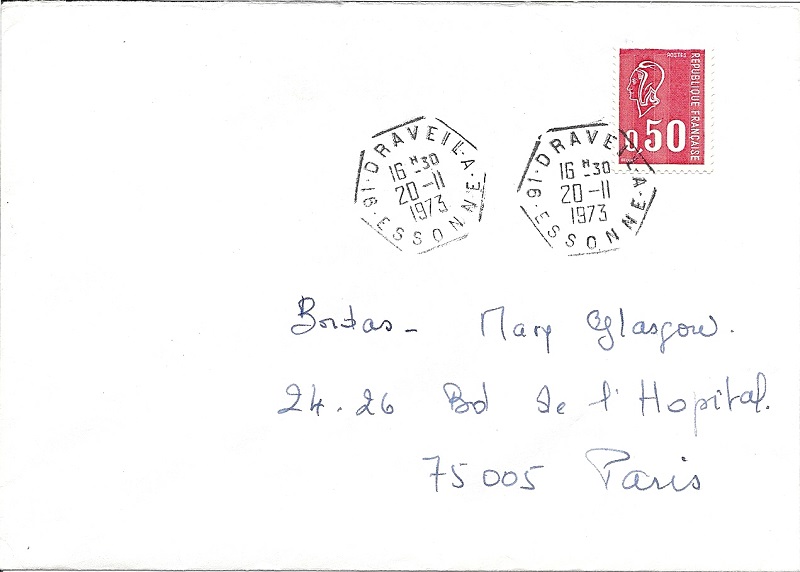
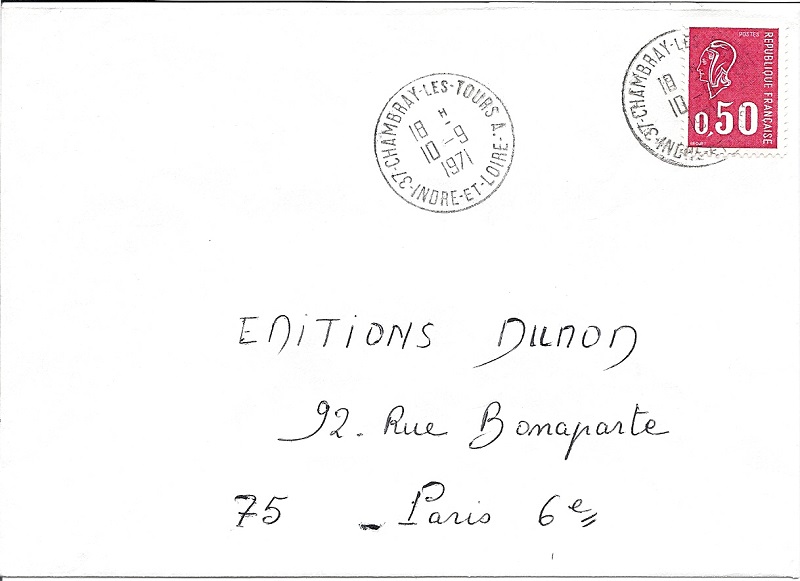
Rural auxiliary office
A rural auxiliary office is an office similar to a urban auxiliary one, but in a rural area. Postmarks of these offices belong to the E9 type of the book [14] of A. LAUTIER with a continuous hexagon.
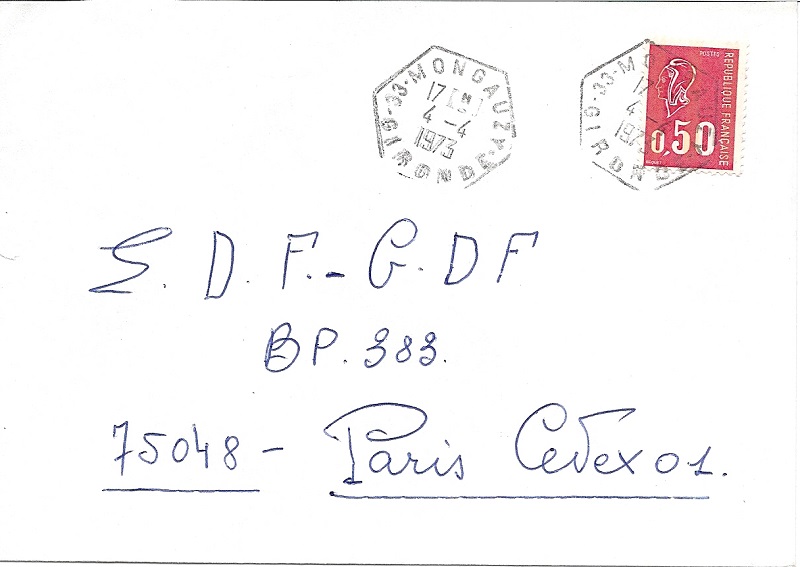
Mail agencies
Mail agencies are establishments connected with a post office and occupied by people outside La Poste, but under contract with it. Such an agency only offers a limited number of services. Postmarks of these offices belong to the F9 type of the [book [14] of A. LAUTIER- > 14] with a dotted hexagon.

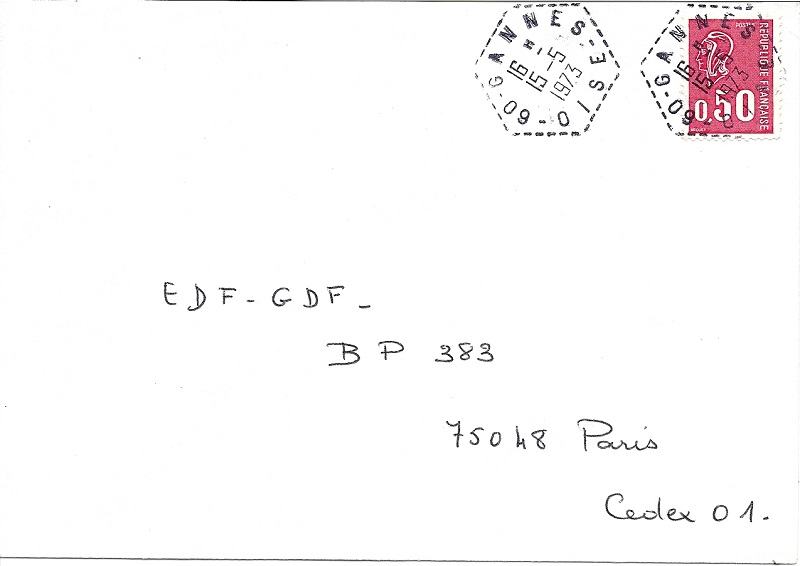
Post office annexes
Post office annexes are offices relocated by a post office and occupied by a post-office employee; they generally provide basic services.
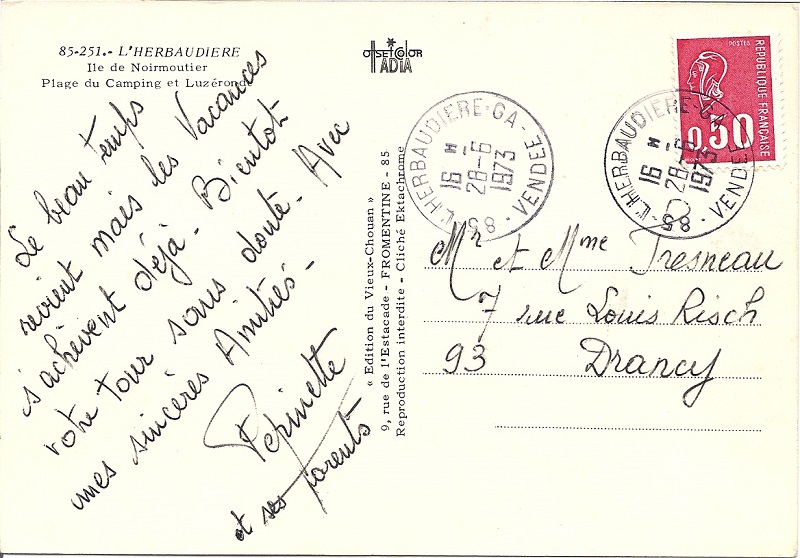

Post offices not open to the public
They are offices out-posted by the administration and the access of which is strictly reserved.
Official offices and services
The highest authorities of the State and some departments possess either a mail service, or a permanent post office. There are also temporary offices, held on the occasion of a congress or on the occasion of parliamentary sessions.

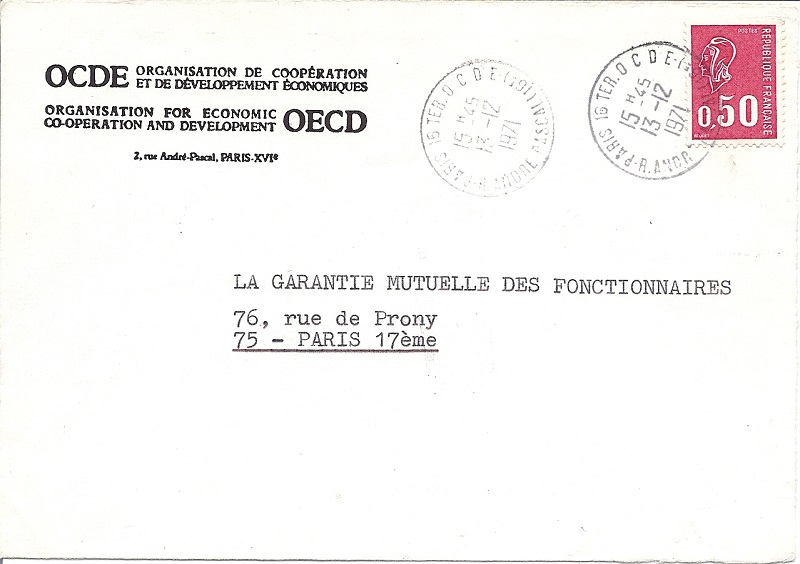
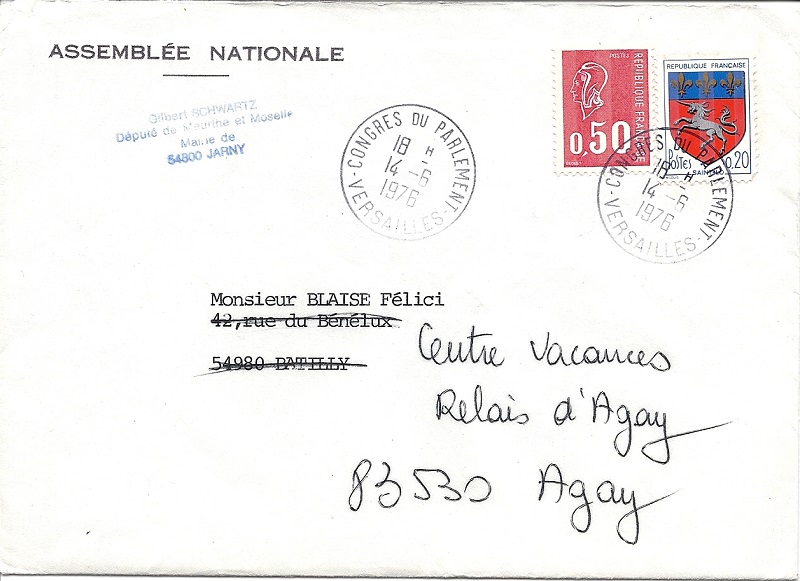
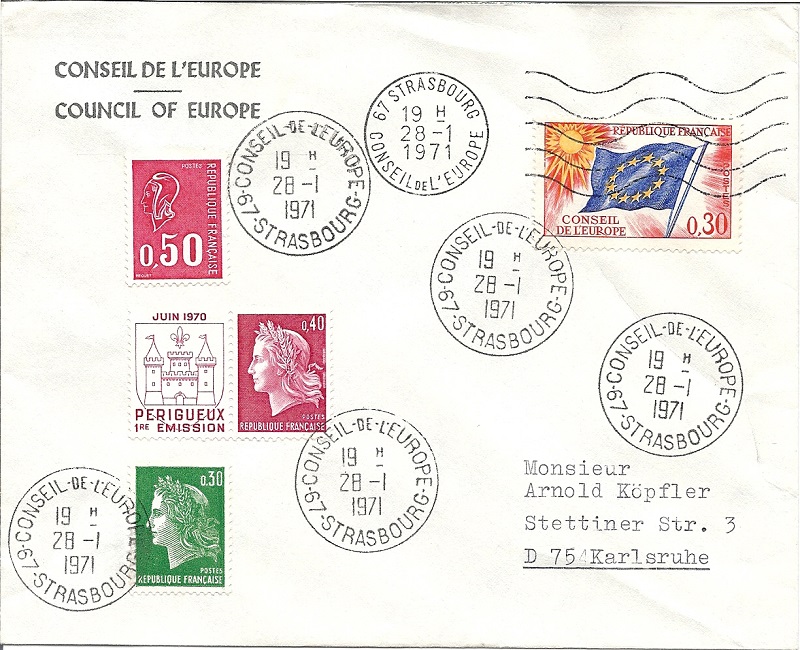
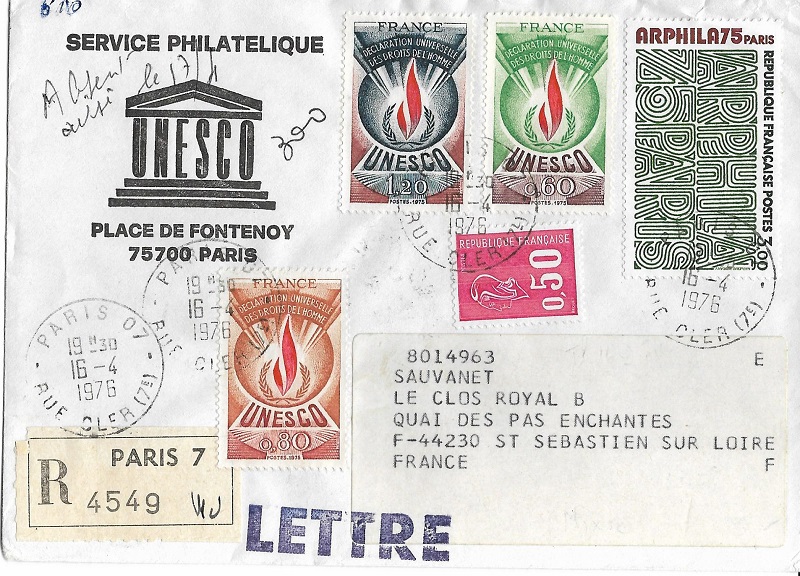
Among these official offices, two of them are particular because the associated governmental services have the right to issue official stamps. Let us remind that service stamps are stamps used by a particular organization (often governmental) and, normally, not usable except this organization.
In France, there are two such organizations: the UNESCO, in Paris, and the Council of Europe in Strasbourg, which regularly issue stamps (since 1961 for the UNESCO and since 1958 for the Council of Europe). Private individuals can use these stamps, provided that the concerned mail is posted in the post offices on which depend these organizations (Paris 07 for the UNESCO and Strasbourg for the Council of Europe).
We can see below two covers corresponding to these two organizations:
The company post offices
The naming company post office generally designates a post office the management of which is entrusted to a person outside to the PTT Administration., although approved by it. Some of these offices are opened to the public, but others are not.

Temporary post offices
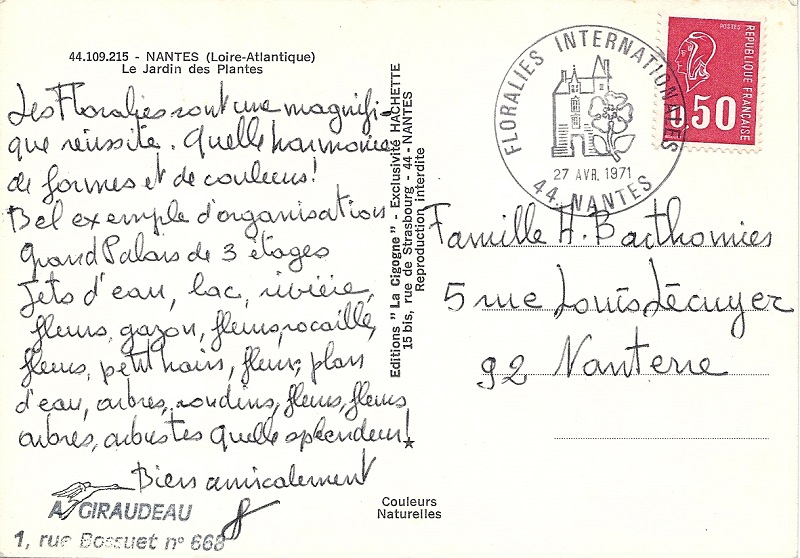
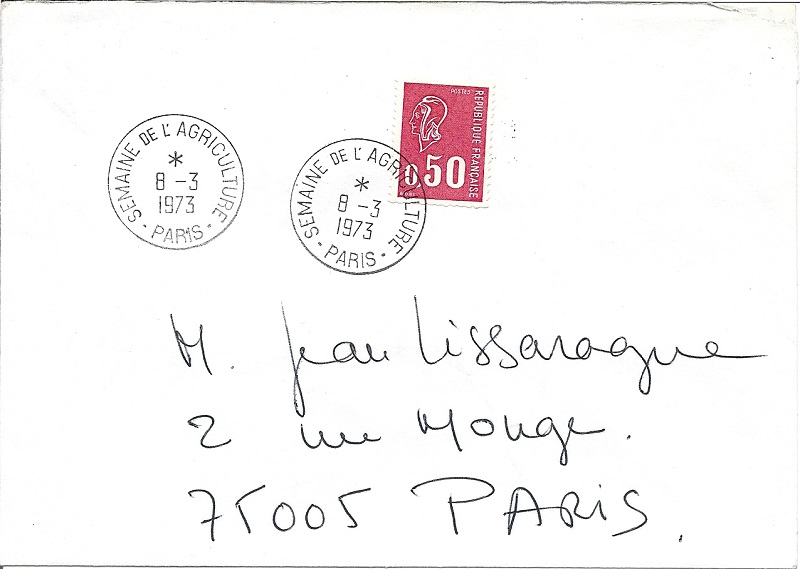
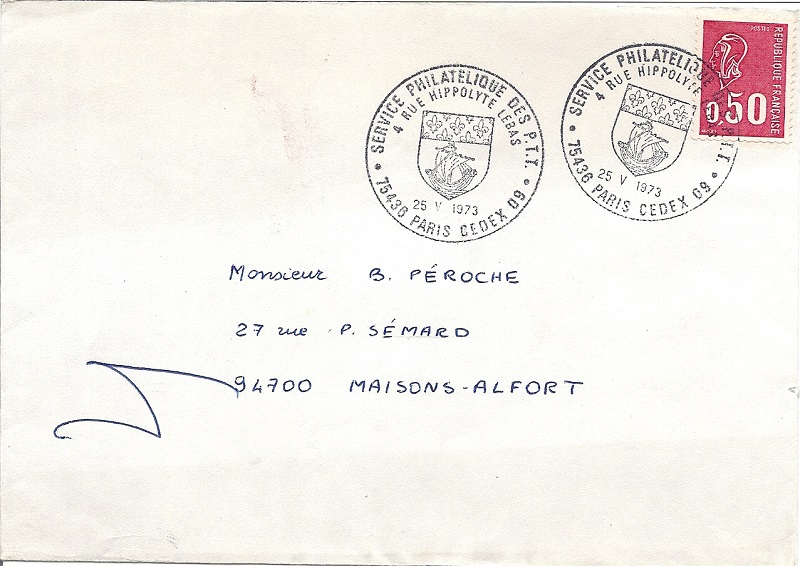
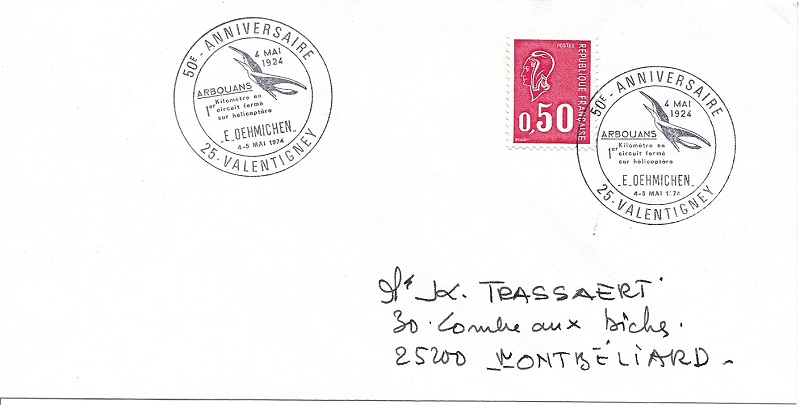
Temporary post offices are post offices set up in a non-permanent basis around a political, commercial, cultural, sporting, ... event.